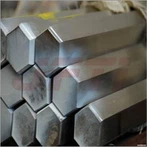
Application of Titanium in Onshore Oil and Gas Exploration and Development
Oil and natural gas exploration and development can be divided into land mining and offshore mining. The oil and natural gas stored in the crust account for about 60% on land and about 40% offshore. The oil and gas in the offshore crust such as the Bohai Sea and the South China Sea are exploited. also has significance.
Before the industrialization and large-scale application of titanium alloys, the commonly used logging tool casings were made of 45 steel, 40Cr steel, and 30MoVNb steel. However, none of them can meet the needs of modern technical logging. And development requires that the metal casing of the logging tool can not only withstand the pressure of more than 98MPa, but also resist the corrosion of underground crude oil and various media, and in logging, but also has a small absorption rate of natural gamma rays. In magnetic logging, There is no shielding effect on the earth's magnetic field. From these performance requirements, titanium alloys are excellent materials for making logging tool housings.
In the mid-1980s, the China Petroleum Administration introduced 6 sets of comprehensive logging tools with Ti-6Al-4V titanium alloy casings from Schlumberger in France and Dresser in the United States. At that time, the casings of domestic logging instruments were still Not made of titanium alloys. Ti-6Al-4V is a kind of alloy with good comprehensive performance, mature and good price. All aspects have been studied in detail.
The casing of the logging tool is a thick-walled long cylinder, and the force it is subjected to is the external pressure. The higher the pressure it can withstand, the deeper the formation can be logged. The withstand voltage test results are shown in Table 1 (data from Yang Xiaoming and Xiong Zhengzhong). It can be seen from the data in the table that the Ti-6Al-4V alloy extruded tube does not have instability failure at room temperature of 112.7MPa and a high temperature of 117.6MPa, while the 40Cr steel tube is unstable at room temperature of 80.4MPa and pressure. The test proves that the critical failure pressure of the 40Cr steel pipe is 78.4MPa-80.4MPa. When the external pressure on the casing of the logging tool is greater than or equal to the critical failure pressure, the instability failure will be flattened or wrinkled, which will destroy the measurement system in the casing. Normal work plays a very important role. The mechanical properties and critical failure pressure of Ti-6Al-4V titanium alloy and 40 Cr steel pipe are shown in Tables 2 and 3.
The maximum operating pressure of the titanium alloy shell of the comprehensive deep well tool imported from France is 137.2MPa, and the allowable operating temperature is 150℃-175℃. According to the data listed in Table 3, as long as the Ti-6Al-4V titanium alloy with the appropriate diameter and wall thickness is selected to manufacture the casing of the logging tool, Schlumberger's allowable maximum withstand voltage value can be fully achieved. China has long been able to extrude titanium alloy pipes of various straight diameters and wall thicknesses with excellent performance. The pipes produced by Baoti Group and others can not only meet domestic demand, but also be exported abroad. The withstand voltage value of domestic Ti-6Al-4V alloy at 175℃ is much greater than 120MPa, which can fully meet the domestic high-tech logging requirements; within the range of commonly used logging tool shell sizes, the theoretical maximum critical value of Ti-6Al-4V alloy is The failure pressure has reached 248MPa, and the casing of the logging tool made by it can fully withstand the pressure of more than 137MPa.
In petroleum exploration and development logging, detecting natural γ-rays in formations and performing energy spectrum analysis on them is one of the main means to obtain formation oil-bearing data. The higher the value, the more reliable the analytical data obtained. The tests of Ti-6Al-4V alloy and 40Cr steel pipe to Co60 and Cs137 γ rays are shown in Table 4.
The working conditions of the logging tool are very harsh, and the shell material is required to have high corrosion resistance. Research shows that Ti-6Al-4V alloy has strong corrosion resistance in crude oil medium and medium containing sulfide and chloride. Therefore, the casing of the logging tool made of Ti-6Al-4V alloy can avoid the critical failure pressure drop caused by the thinning of the casing due to corrosion for a long time. Instability failure.
In petroleum exploration and development logging, some magnetic physical quantities are also measured. The magnetic susceptibility of the logging instrument shell will also affect the logging. If the magnetic susceptibility is too large, the shell will have a shielding effect and affect the normal operation of the magnetic measuring instrument. work, so the smaller the magnetic susceptibility of the metal shell, the better. Therefore, titanium alloy is the best material for making magnetic logging tool housing. The magnetic susceptibility of Ti-6Al-4V alloy is X=3.2×10⁻⁶cm3/g, which is a non-ferromagnetic material. At the same time, titanium alloy also has good susceptibility. processing performance.