Expansion of Titanium Applications: Entering Russian Titanium Alloy Submarines
In the Russian Navy's underwater fleet, the Type 945 attack nuclear submarine is a relatively unpopular role. Part of the reason is that as the world's only mass-produced "titanium alloy submarine" still in service, it has many secrets. Recently, in a TV program produced by the Russian military, the Type 945 nuclear submarine was rarely seen in all directions. From special detection systems, life-saving equipment to combat and entertainment facilities inside the boat, the outside world finally has a chance to get a glimpse of its mysterious face.
The Type 945 and its improved Type 945A nuclear submarines are also known as "Serra" I and "Serra" II, which are the codes assigned to them by NATO. In mid-May, the "Red Star" TV station operated by the Russian military broadcasted "Titanium Alloy Submarines" on the weekend special column "Military Acceptance", revealing the status of these submarines in the Russian Northern Fleet.
First of all, the 945A "Pskov" appeared in the video. This submarine has attracted attention because of its unique "wake detection system" (SOK). When the camera is aimed at the control tower of the "Pskov", people can clearly identify the SOK antenna protruding from the top of it. A similar design has also appeared on Russia's Type 971 attack nuclear submarine, but the antenna shape of Type 945 is relatively simple. There is a bulge on the right side of the Pskov’s command tower, which may form some kind of sensor array with the antenna on the top. What is intriguing is that when the camera turns to another 945A "Nizhny Novgorod", it can be found that there is only a bulge on its control tower without an antenna.
SOK is regarded as the "unique weapon" of Soviet and Russian submarines, and other countries have also studied it, but there are no public reports of large-scale deployment of troops. The history of this system can be traced back to the 1960s. The technical principle is to detect whether there are enemy submarines nearby by collecting data on changes in seawater density. Some people speculate that the improved SOK can analyze certain chemical components, such as submarine surface coatings, by-products of the oxygen generation system, and trace radioactive materials released from nuclear reactors. Regardless of the medium used, SOK provides submarines with passive reconnaissance measures that do not rely on acoustic sensors, which can act as a supplement to sonar. In short, submarines equipped with SOK systems are superior in concealment capabilities.
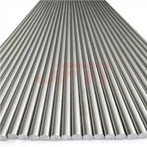
Despite being a legacy of the Soviet Union, the Type 945 is still one of the most deterrent underwater combat platforms of the Russian Navy. The advanced detection equipment on the boat is not all the factors contributing to its status. The program focused on the unique titanium alloy shell of the submarine and invited a sailor to demonstrate that conventional magnets cannot be attached to the hull.
The benefits of using titanium alloys to make submarines are manifold. Titanium alloy has extremely high hardness, which can support submarines to dive to a depth beyond the reach of steel shell submarines; titanium alloy has strong corrosion resistance and helps prolong the service life of submarines; titanium alloy has low magnetic properties, and submarines made of it are difficult to detect. However, the titanium alloy casing has the disadvantages of difficult processing and high cost. During the Soviet Union’s construction of the Type 705 titanium alloy submarine (now decommissioned), workers were required to wear protective equipment similar to space suits and perform welding in a closed space filled with rare gases. Several nuclear submarines produced by the Soviet Union and Russia after 945 did not use titanium alloy shells, mainly to reduce the cost.
In the end, only four Type 945 and Type 945A submarines were built. The first of Type 945 was in service in 1984, the second was in service in 1987, the first of the Type 945A was in service in 1990 on the eve of the disintegration of the Soviet Union, and the second was taken over by the Russian Navy in the following three years. The main difference between the two models is the weapon: Type 945 is equipped with 4 533 mm torpedo launch tubes, plus 2 650 mm launch tubes, while the 945A type has a 533 mm launch tube. All four submarines can use a variety of torpedoes and missiles, including submarine-launched cruise missiles and long-range anti-submarine missiles equipped with nuclear warheads.
The four submarines are under the unified jurisdiction of the Russian Northern Fleet. In recent years, the 945A Nizhny Novgorod and Pskov have been recorded in military operations from time to time. There have been rumors that Russia intends to decommission and demolish the two older Type 945 ships. However, when shooting the submarine dock perspective in the program, one can see a Type 945 moored beside the two Type 945A ships mentioned above, which seems to imply its fate has not yet been determined, and it is still possible to accept modification and return to service.
The film crew entered the interior of the "Nizhny Novgorod". When passing by the control room, the camera stopped for a moment on a set of "posters" on the bulkhead. Most of the pictures and text on the "posters" were related to battleships, submarines, and maritime patrol aircraft of European and American countries, obviously for the convenience of the Russian army. The sailor recognizes the target. Similar to other Russian submarines, Type 945 also has a detachable rescue cabin to help people evacuate when the submarine is severely damaged. The video also showed various spaces in the boat, including the officer’s cabin, sailor’s quarters, storage room, kitchen, and a miniature sauna with a Russian style.
In addition to the submarine itself, the program also introduced how the Russian military can ensure that the main battleship is protected from special threats such as damage by enemy agents when it is at the base. In the video, a reporter from the "Red Star" TV station walked past a checkpoint on the shore, with a BTR series 8-wheeled armored vehicle parked next to it. The guards of the naval base are equipped with the DP-61 "anti-sabotage grenade launcher". This weapon looks like a shoulder-fired rocket launcher, but it launches small depth charges designed to deal with small underwater targets such as divers.
The Russian military took the initiative to disclose its most unique and mysterious submarine on television programs, aiming to demonstrate the country's intention to continue to expand the navy and modernize maritime operations and to deter potential opponents. For a period of time in the future, with the combat performance that has not been completely declassified, the Type 945 "titanium alloy submarine" will still be an important part of the Russian submarine force.