
Dental implant titanium wire refers to the use of welding the upper part of the titanium implant in the mouth to repair the dental accessories to quickly make a fixed dental restoration, which improves the flexural strength and stability of the restoration. Studies have shown that using titanium wire as the material for dental implants can reduce the probability of dental restorations breaking. In the past five years, its 5-year success rate is as high as 99%.
|
|
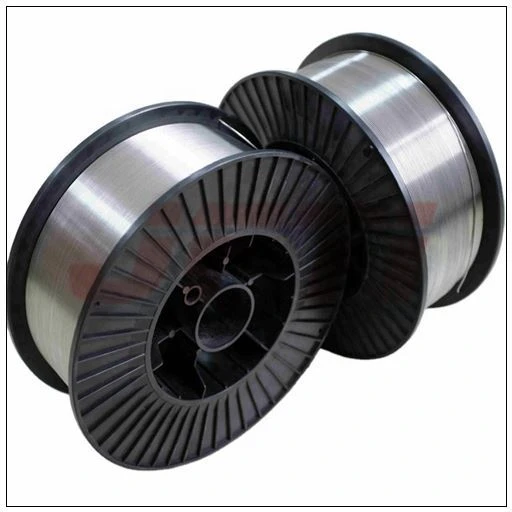
Using the digital three-dimensional simulation method, the thickness of the implant restoration and the distribution position of the titanium wire can be accurately estimated, which greatly reduces the adverse effects of the previous traditional methods such as matching the original tooth design shape in digital software, and then bending and modifying it takes a long time.
In industrial production, laser welding and arc welding are often used for welding titanium materials. Since the thermal conductivity of titanium materials is much worse than that of copper electrodes, the heat is dissipated by the copper electrodes after welding, which avoids heat conduction around the implant. Titanium welding goes through a preparation stage, a welding stage and a repair stage.
The prosthesis does not need to be disassembled frequently after the installation on the day of the operation, which reduces the damage to the tissue around the implant and reduces the risk of marginal bone resorption; it reduces the traditional final prosthesis production process such as casting, plaster model expansion, wax-up shrinkage, and stent casting. Compared with the digital cutting of titanium stents, the production is simple, time-consuming and low-cost; small mechanical complications such as tooth cusps can be repaired directly with resin, without the need for baking plastic restorations, etc. Need to be reworked.
The intraoral welding technique is highly sensitive and has a long learning curve; the masseter and tongue muscles in the posterior teeth affect the welding operation; the gap between the welded titanium wire bracket and the immediate restoration is filled with resin material, and the internal stress generated by the curing shrinkage of the resin material Unable to release.
Immediate restoration after titanium wire dental implants has become a common goal of implant doctors and patients. Intraoral resistance welding technology for immediate restoration or final restoration of edentulous jaws can achieve precise passive positioning, reduce chairside operation time, and provide a strong splinting effect. Combining with digital technology and continuously updating the properties of titanium materials, simplifying the operation and broadening the application range is expected to be the future research direction of intraoral welding.


