Volcanism or magmatism is the only way to bring material and energy from deep within the Earth to the surface or shallow crust. Therefore, understanding the occurrence and development process of magmatism is an important means to understand the transfer of matter and energy within the earth. In this regard, the application of emerging non-traditional metal stable isotopes such as Li, Mg, Fe, Ca, and Zn for measurement and tracing has a significant effect.

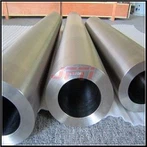
Metal titanium (Ti) isotopes are a new research direction in non-traditional stable isotope geochemistry, which may play an irreplaceable role in tracer magmatic processes.Titanium is the raw material for making titanium stripts.
In order to better understand Ti isotope fractionation during magmatic processes, Zhao Xinmiao, an associate researcher at the Institute of Geology and Geophysics, Chinese Academy of Sciences, cooperated with Tang Suohan and Zhu Xiangkun, researchers at the Institute of Geology, Chinese Academy of Geological Sciences, and Zhang Hongfu, an academician of the Chinese Academy of Sciences and a professor at Northwestern University. , A high-precision Ti isotope determination method was successfully established in the Key Laboratory of Isotope Geology, Ministry of Natural Resources, Institute of Geology, Chinese Academy of Geological Sciences, and about 60 mid-ocean ridge basalts, back-arc basalts, and Kilauea in Hawaii from different geological backgrounds around the world were analyzed. The Ti isotopic composition of samples such as Koolau Ocean Island basalt and volcanic rocks from Hailar Basin, Inner Mongolia, China, were studied in detail. The results show that: Fe-Ti oxide unsaturated volcanic rocks (SiO2 content of 5 wt%) have a limited range of δ49/47Ti composition (-0.04‰~0.08‰) and do not change with magma differentiation; Fe-Ti oxides In saturated volcanic rocks (SiO2 content > 54 wt%, MgO content < 5 wt%), δ49/47Ti varies significantly (0.01‰-1.91‰), and is positively correlated with SiO2 content and negatively correlated with MgO content. The results were published in Contributions to Mineralogy and Petrology.