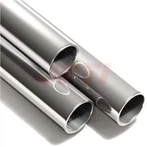
Welding and cutting of titanium plate Cutting is an inevitable job, but due to some characteristics of the titanium plate itself, it also has its particularity during welding and cutting, and it is easier to cause various defects such as welded joints and heat-affected zone (HAZ). Welders should pay special attention to the physical properties of cutting titanium plates. For example, the thermal expansion coefficient of austenitic cut titanium plate is 1.5 times that of low carbon titanium plate and high chromium cut titanium plate; thermal conductivity is about 1/3 of that of low carbon titanium plate, while high chromium cut titanium plate The thermal conductivity is about 1/2 of the low-carbon titanium plate; the specific resistance is more than 4 times that of the low-carbon titanium plate, and the high chromium-based cutting titanium plate is 3 times. The above conditions plus metal density, surface tension, magnetism, and other conditions will affect the welding conditions.

In summary, the welding function of titanium plate is first reflected in the following aspects:
(1) High-temperature cracks: The so-called high-temperature cracks here refer to cracks caused by welding. Thermal cracks can be roughly divided into condensation cracks, micro-cracks, HAZ (HAZ) cracks, and reheat cracks.
(2) Low-temperature cracks: Sometimes low-temperature cracks occur in martensite-shaped cut titanium plates and some ferrite-type cut titanium plates with martensite arrangement. Since the main reasons for this are the dispersion of hydrogen, the degree of confinement of the welding connection, and whether there is hardening in the middle, the solution is to reduce the dispersion of hydrogen during the welding process, suitable for preheating and post-weld heat treatment, and reduce the welding strength.
(3) Wear resistance of welded joints: In order to reduce the high-temperature crack sensitivity of austenitic cut titanium plates, in terms of composition description, usually, 5-10% of ferrite will remain during this period. However, the presence of ferrite leads to a decrease in low-temperature tolerance. In the welding process of dual-phase-cut titanium plate, the reduction of the austenite volume of the welded joint area has an impact on the durability. During this period, another ferrite is added, and its endurance value shows a significant downward trend.